Created for IWU Workshop 3
Artifact 3: AI-Powered ECG Screening Newsletter
Audience
This is for my instructor and classmates. It also works as a writing sample for anyone interested in how I analyze emerging AI applications in healthcare and communicate technical concepts to a broader audience.
Artifact
An industry newsletter analyzing how AI-powered ECG screening technology is being deployed to prevent sudden cardiac arrest in student athletes. The newsletter covers the legislative, technical, and commercial landscape around companies like Ainthoven that are building scalable cardiac screening infrastructure.
Why it matters
I chose this artifact because it sits at the intersection of AI, healthcare, and real-world deployment, which is the space I care most about. Writing this newsletter forced me to move past surface-level AI hype and dig into the actual mechanics: how the models work, what makes the data defensible, why regulation matters, and what it takes to scale a system that directly impacts lives.
Reflection
This newsletter was different from my other artifacts because it required me to synthesize information from multiple domains: AI/ML architecture, healthcare regulation, sports medicine, and business strategy. I had to understand enough about each area to write something coherent and credible, not just technically accurate but readable for people who are not deep in any one of those fields.
What stood out to me most was the data moat concept. Ainthoven built their advantage not just on model performance but on having access to demographically specific pediatric ECG data that no one else has. That is the kind of strategic thinking I want to bring to my own AI work: building systems where the data itself becomes a long-term asset, not just the model weights.
Writing this also pushed me to think harder about the regulatory side of AI deployment. Florida's mandate is a real example of legislation driving technology adoption at scale, and it showed me that understanding the policy landscape is just as important as understanding the tech when you are trying to deploy AI systems that affect people.
Newsletter
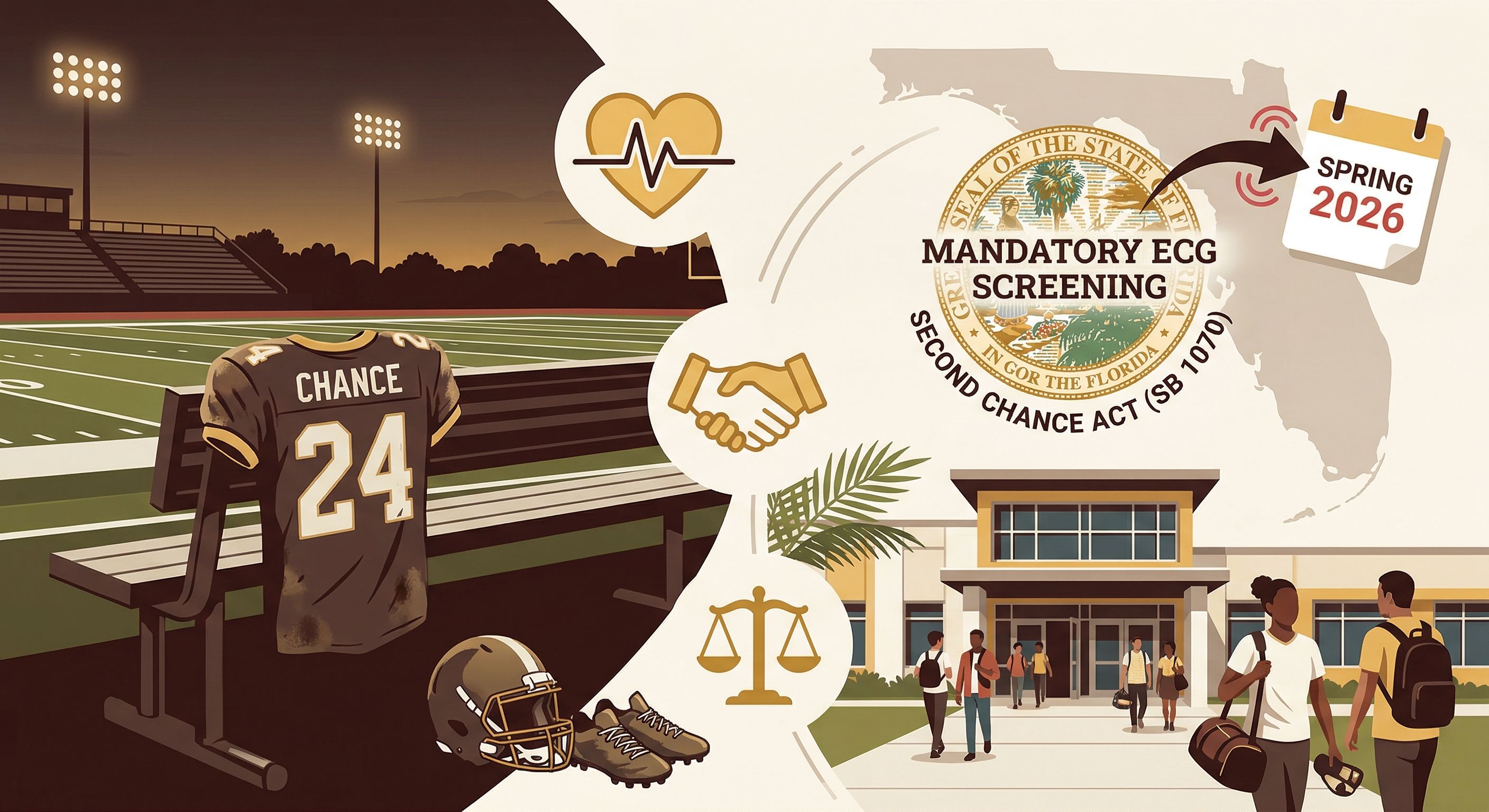
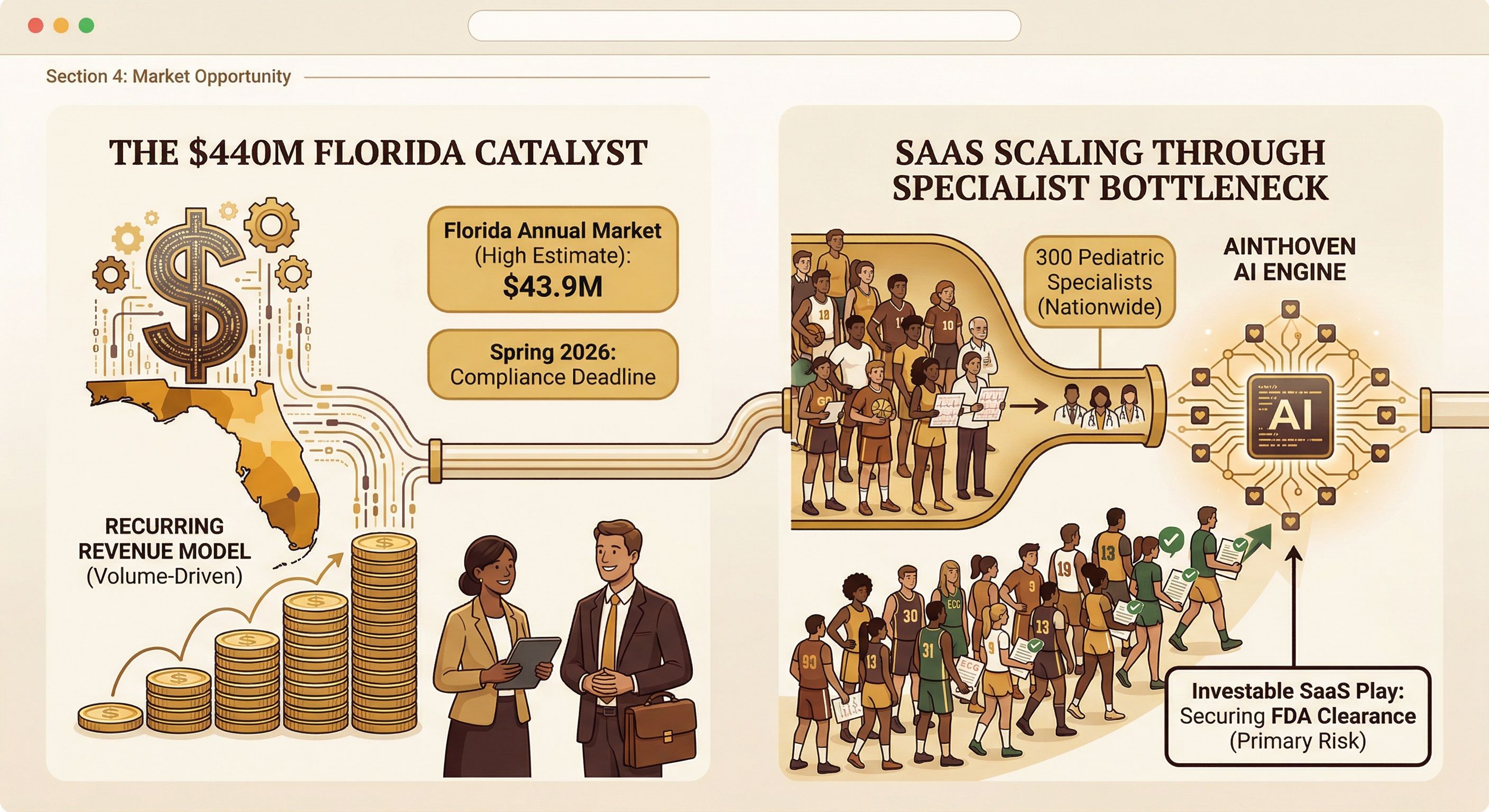
AI IN HEALTHCARE • MARCH 2026 • INDUSTRY ANALYSIS | How AI is Closing the Gap in Student Athlete Safety—and why Florida's landmark legislation is creating a $440M market driven by a 300-expert bottleneck. | 🏥 Healthcare Technology 🤖 Artificial Intelligence ⚕️ Medical Diagnostics | | | The "Second Chance" Catalyst: Florida's Bold Move | Florida has fired the opening salvo in a regulatory revolution that will redefine the standard of care for youth athletics. With the passage of the Second Chance Act (SB 1070)—famously known as the Chance Gainer law—Florida became the first state in the nation to mandate electrocardiogram (ECG) screenings for high school athletes. Named in honor of an 18-year-old who died from sudden cardiac arrest (SCA) during a 2024 game, the law requires every student-athlete to receive at least one screening starting in the 2026-27 school year. | | 89% Reduction in cardiac deaths (Italy, post-1982) | 94% ECG sensitivity for detecting HCM | 3-20% Detection rate via standard physicals | | However, for school districts and investors, the real deadline is much closer: athletic registrations and summer conditioning typically commence in May, meaning districts must achieve full compliance by Spring 2026. This legislation addresses a lethal diagnostic gap: standard sports physicals—dependent on stethoscopes and self-reported history—identify a mere 3-20% of at-risk athletes. ECGs, by contrast, offer a sensitivity of approximately 94% for detecting conditions like Hypertrophic Cardiomyopathy (HCM). | | | Legislative Timeline From precedent to mandate: 44 years in the making | |
Fatal incident
Survived with intervention
Policy milestone
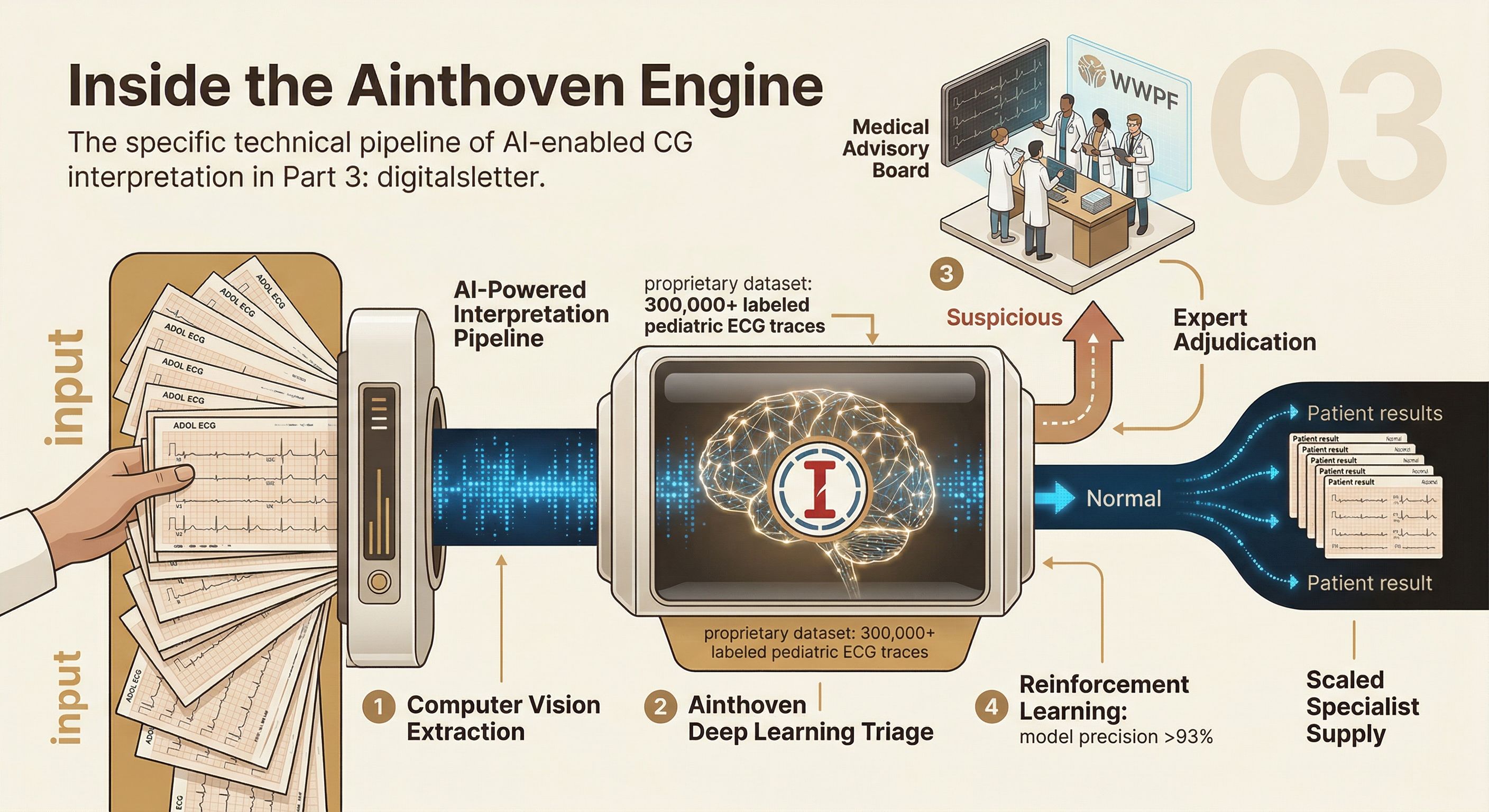
| | 1982 Italy implements mandatory ECG screening for competitive athletes | | 1990 Hank Gathers (Loyola Marymount basketball) collapses and dies from HCM during a game at age 23 | | 1993 Reggie Lewis (Boston Celtics) dies from HCM during offseason practice at age 27 | | 2003 Marc-Vivien Foé (Cameroon national team) collapses and dies during FIFA match at age 28 | | 2012 Fabrice Muamba (Bolton Wanderers) suffers cardiac arrest during FA Cup match—survives due to rapid medical response | | 2021 Christian Eriksen (Denmark national team) collapses from cardiac arrest during Euro 2020 match—survives with immediate CPR and defibrillation | | 2023 Damar Hamlin (Buffalo Bills) suffers cardiac arrest during NFL game—survives and becomes advocate for cardiac screening initiatives | | 2024 Chance Gainer (Port St. Joe High School) dies from sudden cardiac arrest during a high school football game at age 18—catalyst for Florida legislation | | 2025 Florida passes the Second Chance Act (SB 1070), mandating ECG screenings for all high school athletes | | Spring 2026 Compliance deadline: Districts must have screening programs operational | | 2026-27 First school year with mandatory ECG screenings for all student athletes | | | | The 300-Expert Bottleneck | "The primary obstacle to universal screening isn't the cost of hardware—it is the scarcity of human capital." | Currently, only approximately 300 pediatric electrophysiologists nationwide possess the sub-specialty expertise to interpret adolescent heart rhythms. This shortage is the cornerstone of the American College of Cardiology's (ACC) opposition to mandates, citing the risk of a "false positive" crisis. The Challenge: Teenage "athlete's hearts" often display benign physiological adaptations like sinus bradycardia or early repolarization that standard adult algorithms frequently misidentify as pathologies. Ainthoven is specifically engineered to solve this scarcity, acting as the bridge between legislative demand and specialist supply. This creates a critical market opportunity: a technology platform that can scale expert-level interpretation without requiring proportional scaling of human specialists. | | | Inside the Ainthoven Engine: Computer Vision & Deep Learning | Ainthoven, the for-profit spinoff of the prolific non-profit Who We Play For (WWPF), has built an AI-enabled interpretation tool designed to bypass the traditional hardware-lock-in of legacy medical devices. Their technical moat is built on the world's largest proprietary dataset: 300,000+ labeled pediatric ECG traces. | | 1 Computer Vision Extraction Digitize analog printouts into structured data | 2 Deep Learning Triage PyTorch pipeline evaluates against International Criteria | 3 Human-in-the-Loop Suspicious cases routed to Medical Advisory Board | 4 Reinforcement Learning Expert adjudications improve model precision (>93%) | | Unlike competitors who rely on adult clinical data, Ainthoven's models are trained specifically on the unique morphology of the adolescent heart—a critical differentiator that reduces false positives and improves diagnostic accuracy. | | | The Business Case: Market Potential | The Florida mandate transforms ECG screening from a niche volunteer effort into a high-volume, recurring market. By capping screening costs at $20–$50, the state has created a sustainable, volume-driven revenue model. | | Annual Market Revenue Potential | Florida Annual Market (Low Estimate) | | $17.6M | | Florida Annual Market (High Estimate) | | $43.9M | | National Annual Market (Low Estimate) | | $176M | | National Annual Market (High Estimate) | | $440M | | Critical Milestone: Ainthoven is positioned as the investable SaaS play in this ecosystem, though it remains in a critical pre-FDA status. The company's primary milestone—and primary risk factor—is securing FDA clearance to operate as a diagnostic tool. | | | BeeNex AI: Powering the Next Generation of Cardiac Safety | While Ainthoven leads AI-powered ECG interpretation, BeeNex AI is building the critical infrastructure layer that makes universal screening operationally feasible—and legally compliant. In partnership with Who We Play For, BeeNex AI is developing a comprehensive data pipeline that addresses the two challenges blocking nationwide deployment: HIPAA-compliant data anonymization and real-time predictive analytics. | | 🔒 HIPAA-Compliant Data Anonymization Ensures student health data meets federal privacy requirements while maintaining clinical utility for model training | | 🧠 Custom ML Model Development Purpose-built detection algorithms trained on both real-time ECG feeds and longitudinal historical data from Who We Play For's 300,000+ screening database | | ⚡ Real-Time Risk Stratification Continuous monitoring infrastructure that identifies high-risk patterns as they emerge, enabling proactive intervention before catastrophic events | | This partnership directly addresses the operational bottleneck facing Florida school districts: how to process hundreds of thousands of ECGs annually while maintaining both diagnostic accuracy and regulatory compliance. The BeeNex AI Advantage: By combining anonymized historical data with real-time monitoring capabilities, the platform doesn't just detect existing conditions—it predicts future risk, turning ECG screening from a one-time checkpoint into a continuous protective system.
| | | Conclusion: A New Standard for the Next Generation | Ainthoven represents the only scalable solution to a national health crisis. By combining a massive, demographically specific "data moat" with a hardware-agnostic AI architecture, the company has solved the primary obstacle to universal screening: the specialist shortage. As legislative momentum builds in states like Nevada and New Jersey, the Florida model—underpinned by Ainthoven's technology—is poised to become the global standard for sports cardiology. | "This is no longer just a philanthropic mission; it is the institutionalization of athlete safety through code." | The convergence of regulatory mandate, technological capability, and mission-driven capital has created a rare moment: a genuine market opportunity that saves lives at scale. For school districts, investors, and technology partners, the question is no longer if universal ECG screening will become standard—but how quickly the infrastructure can be deployed to meet the Spring 2026 deadline. | | | AI in Healthcare • Industry Analysis • March 2026 This newsletter analyzes emerging commercial applications of AI across healthcare technology, artificial intelligence platforms, and medical diagnostics sectors. | | | |